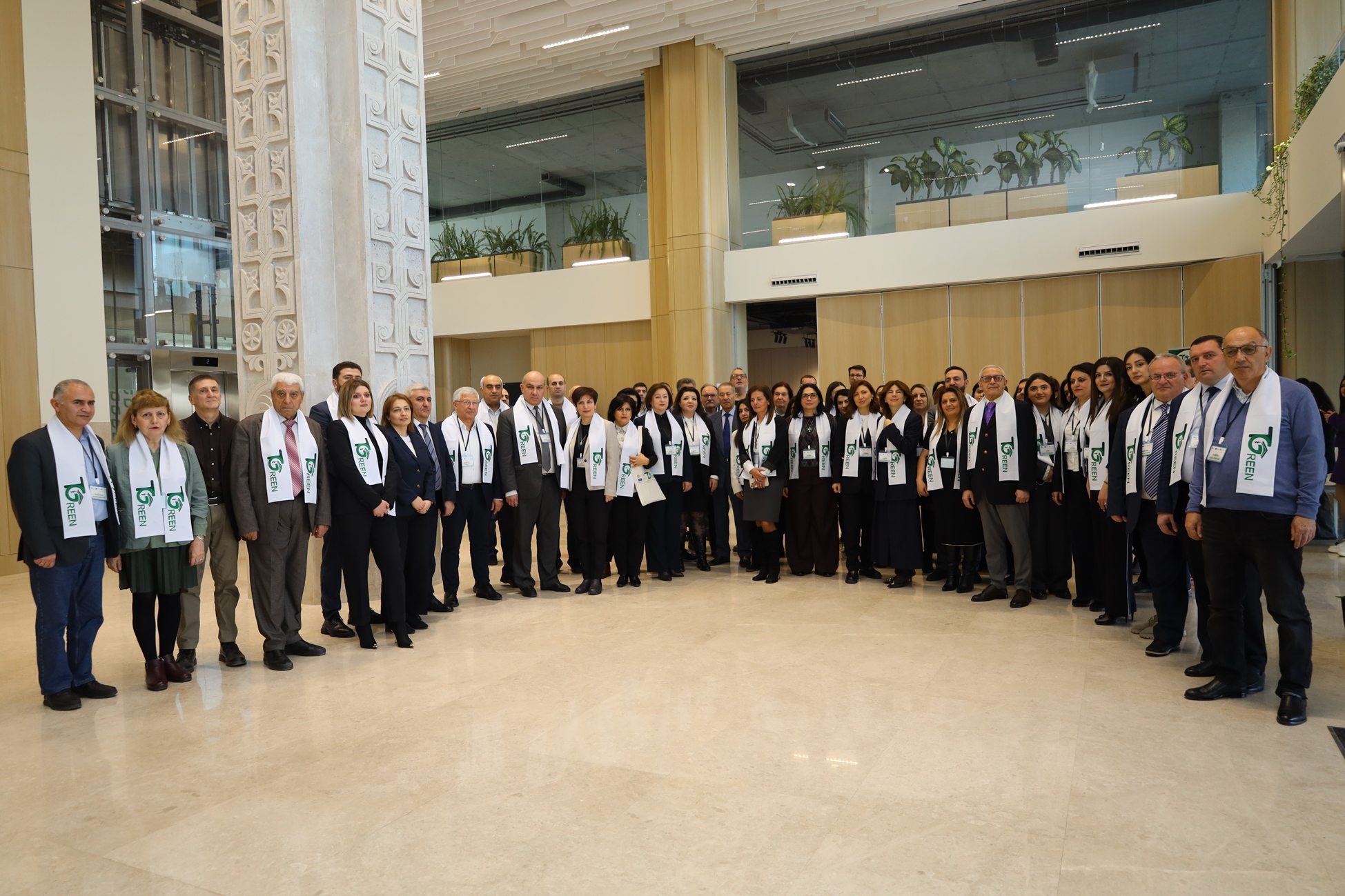
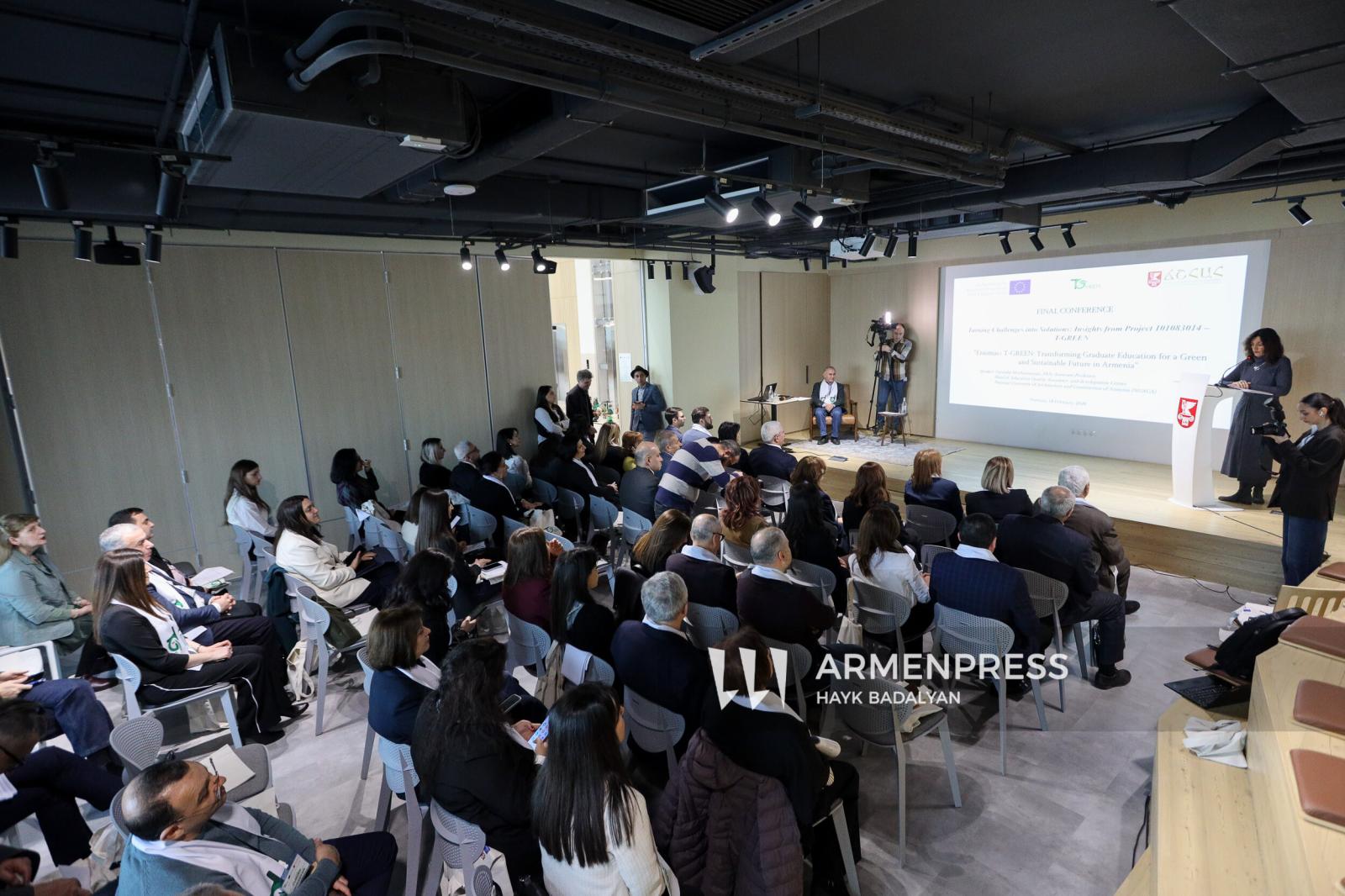
The T-GREEN project’s outgoing milestone event, “Workshop for Discussing the Results of Pilot Functioning of MA Degrees”, was hosted by the Catholic University of Portugal (Porto) from December 2–4, 2025. This 3-day event brought together representatives of Armenian and EU partner universities, as well as other consortium members, to reflect on the outcomes of the piloting of newly developed Master’s programs under the EU-co-funded Erasmus+ T-GREEN (Transforming Graduate Education for Green and Sustainable Future) project and to jointly shape their refinement and long-term sustainability.
The workshop officially opened with welcome remarks from the hosts at Universidade Católica Portuguesa and from the Armenian project leadership. These introductory reflections highlighted the strategic importance of modernising graduate education for a green and sustainable future and reaffirmed the consortium’s shared commitment to joint and multiple degree pathways.
Representatives of EU partner universities then presented an in-depth overview of the legal frameworks, national regulations, and institutional procedures governing joint, double, and multiple Master’s degrees in Portugal, Lithuania, Poland and Greece. By sharing their experience with program promotion, student enrollment, and internal regulatory practices, EU partners provided Armenian universities with a clearer roadmap for aligning their processes with European standards.
Armenian partner universities that developed, reprofiled, and piloted the new Master’s programs, spanning economics, agriculture, architecture, engineering, management, and IT, presented the results of their first implementation cycle. Their presentations offered open and constructive reflections on student engagement, course redesign, pedagogical innovations, and the practical challenges of implementing curricula aligned with green and sustainable development priorities. The session highlighted both promising achievements and areas requiring further coordination and capacity-building across institutions.
The newly adopted RA Law on Higher Education and Science provides a comprehensive framework for joint MA degrees, and representatives of the Higher Education and Science Committee introduced the key legal changes. However, it is important to note that the law requires further regulation through the adoption of normative legal acts, and the experience gained within the T-GREEN project may be highly valuable in designing such national regulatory documents. During the workshop, representatives of Armenian HEIs developed proposals for the further implementation of joint programs and facilitated discussions supporting rt understanding of how to operationalise joint-degree pathways effectively.
Finally, the workshop concluded with agreement on the dates and structure of the project’s final conference, to be held in Yerevan (Armenia) on February 17–19, 2026.
The T-Green project, co-funded by the EU, launched in 2023, focuses on necessary reforms in post-baccalaureate education at universities, with a key emphasis on “Green” policies. The project is coordinated by the National University of Architecture and Construction of Armenia and Eurasia International University (co-coordinator).
The Armenian participants in the project include the Higher Education and Science Committee and Ministry of Education, Science, Culture and Sports of the Republic of Armenia, National Center for Quality Assurance, Yerevan State University, State University of Economics of Armenia, French University of Armenia, National Polytechnic University, National Agrarian University of Armenia, Goris State University, Gavar State University, “Erasmus Student Network Yerevan,” and “Hope Bridge” NGOs. The EU partners involved in the project are the International Hellenic University (Greece), Mikolas Romeris University (Lithuania), the Catholic University of Portugal (Portugal), and the Jagiellonian University of Krakow (Poland).